
Night Guards in Poulsbo, WA
Unconscious teeth grinding and clenching, known as bruxism, is a common issue that tends to happen at night while patients are asleep. Night guards can help alleviate symptoms of bruxism by creating a barrier between your teeth.

Why Choose A Night Guard?
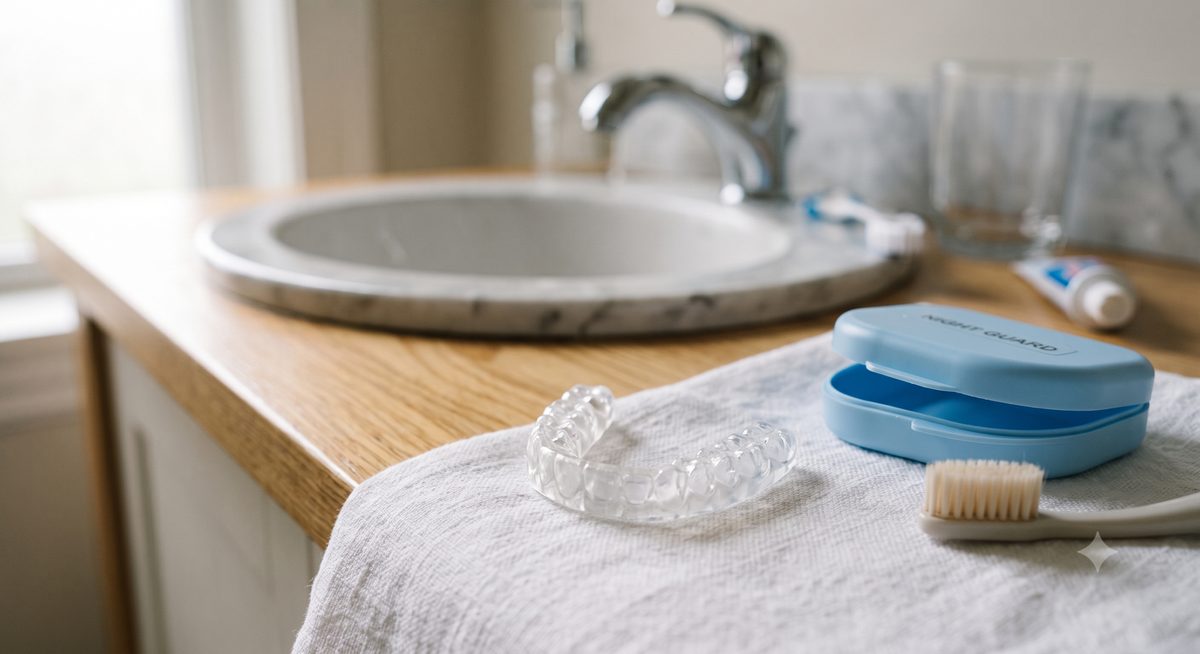
A night guard protects your teeth from grinding-related damage by creating a barrier between your upper and lower teeth while you sleep. Depending on the severity of your case, night guards can be made from several different materials with varying degrees of softness, custom-fitted to your smile for a comfortable, secure fit.
Could Your Grinding Be Related To Sleep Apnea?
If you have a history of clenching, grinding, or snoring, we typically want to have you evaluated for sleep apnea before prescribing a night guard. Bruxism and sleep apnea often go hand in hand.
If you snore, grind, or clench, let's start with a sleep evaluation to make sure we're addressing the right issue.
Learn About Sleep MedicineThe Benefits of Night Guards
Protects Your Teeth
A night guard prevents the wear, chipping, and cracking that comes from grinding your teeth against each other.
Reduces Jaw Pain & Headaches
Easing the pressure from clenching and grinding can help reduce jaw pain, tension headaches, and other bruxism-related discomfort.
Custom, Comfortable Fit
Your night guard is custom-made from a mold of your teeth, ensuring a comfortable fit without altering your natural bite.
Frequently Asked Questions
Check out these frequently asked questions, or call us to speak with our team.
How do I know if I need a night guard?
Common signs of bruxism include waking up with a sore jaw or headache, noticing flattened or chipped teeth, or a partner mentioning they hear you grinding your teeth at night. If you're experiencing any of these, we recommend scheduling a consultation.
Will a night guard change my bite?
No. A properly fitted night guard is designed to protect your teeth without altering your natural bite alignment.
How long does a night guard last?
The lifespan of a night guard depends on the severity of your grinding and the material used, but most last several years with proper care.
How do I clean my night guard?
Rinse your night guard with water after each use and brush it gently with a toothbrush, avoiding toothpaste, which can be abrasive. Store it in its case when not in use.
Why would I need a sleep study before getting a night guard?
Clenching, grinding, and snoring are often linked to sleep apnea. Before prescribing a night guard, we typically recommend a sleep study to rule out sleep apnea as the underlying cause, since treating that first is essential for your health.